
Every movement can disturb the mind and uses energy. It is harder to be still than to move and it's in our nature to move and fidget when things are not comfortable. This seated yin practice draws your attention from the breath to drop into stillness to conserve your energy and strengthen the mind.
Read moreAcuYin for better sleep
Have trouble sleeping? When the mind and heart is alert, it's like a flock of birds. Using 3 powerful acupressure points together with yin will help calm your mind and heart for a good night sleep.
Read moreNourish your nervous system
Your nervous system is central to your health and well-being. This very specific roll and restore and breath based yin practice aim to rewire your nervous system and expand your lung capacity to regulate autonomic nervous system, circulatory and lymphatic system. Finish with a short yoga nidra and more breath focus practice.
Read moreBlissful yoga nidra
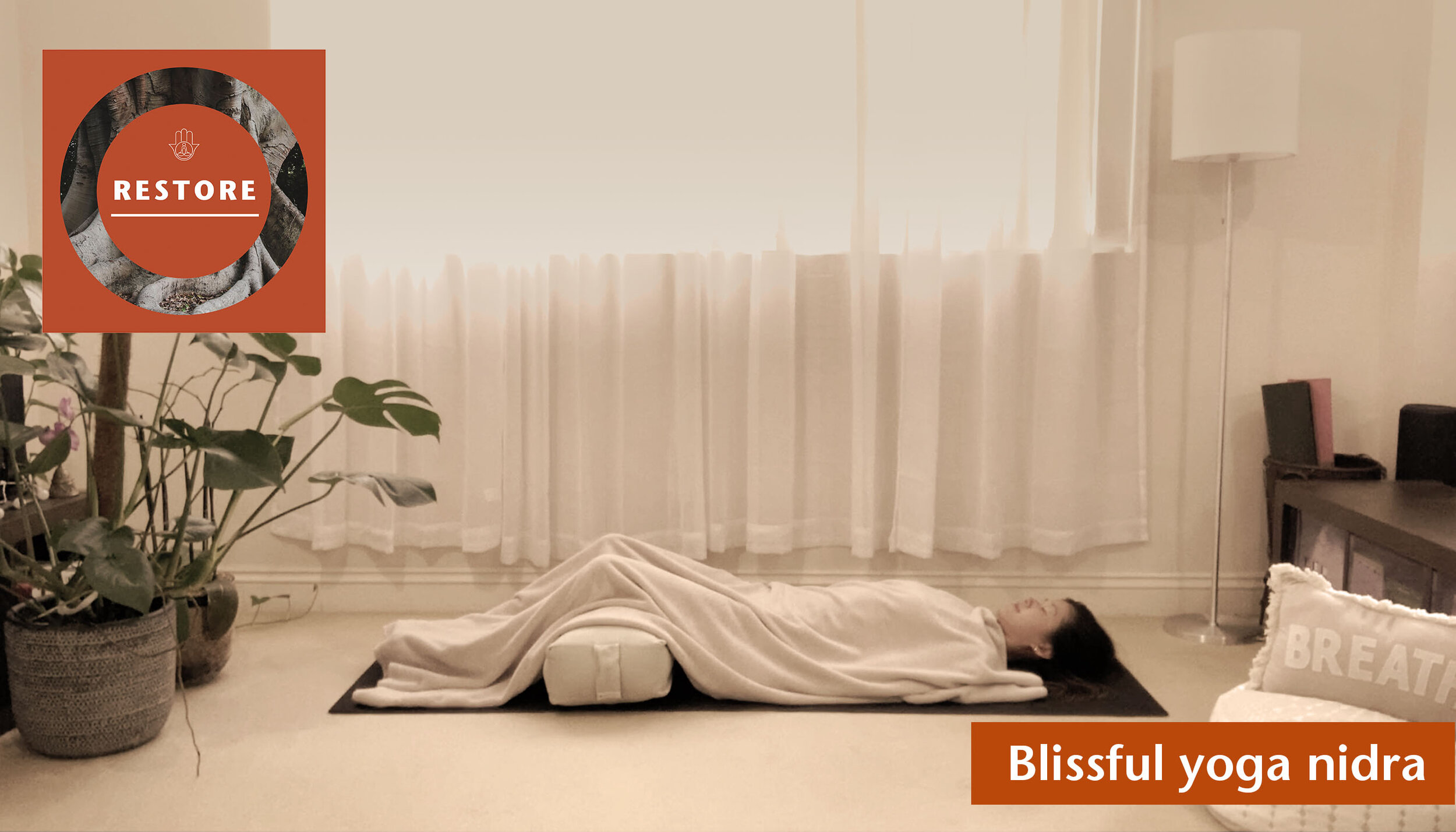
Yoga nidra is an ancient practice of yogic sleep, a body scan practice to bring awareness to different parts of the body to a relax state which improves the quality of your sleep (20 minutes of yoga nidra is equal to 2 hours of sleep). Effective for melting stress, pain management, anxiety and depression. Get ready to restore your body, clear your mind and drop into bliss! Ideal to practice before sleep for deep rest.
Read morePitta - clear emotional stress
Pitta (fire and water) dosha predominant tend to be wide awake and alert during the night when emotional distress or excessive work or exercise which disrupt the quality of sleep. The goal of this mindful breath, sound and movement practice is to clear emotional stress using flowing movements and humming in poses to dissolve tension on the body and mind to prepare for sweet sleep.
Read moreVata - calm the heart mind
Vata (air and space) dosha predominant tends to be light sleeper, are often anxious and have excessive thinking which keeps you awake at night. The goal of this Qigong and Yin practice is to calm the heart mind, to relax the nervous system with some nighttime gentle movement and holding acupressure point in yin to settle the energy for a deep state of rest.
Read moreLong, slow and deep
How many breaths do you take per minute? When you take over 12 breaths/minute, you activate sympathetic state (lower brain of fight or flight) whereas if you take less than 12 breaths/minute, you activate parasympathetic state (higher brain of calm, safe and connects to enlightened spiritual brain). This is a long, slow and deep yin practice focus on 6 breaths per minute to optimise your blood pressure, relaxation and set you up for a good night sleep.
Read moreNight time ritual
A restorative bedtime yin to wind down from the day and prepare you for a good night sleep.
Read moreCanvas of stillness
Stillness is medicine. Let this restorative style of Yin be a canvas to create physical space and mental space for everything to be processed.
Read moreGood night! Wind me down
When the sun is setting, so is your energy which reflects in this resting phase of your day. Time to wind down and have a restful sleep as your energy needs to replenish and recharge.
Read more