
Day 3 Yang Sheng
Take a look at the organ clock below and check in with yourself — what does it look like for you during this time? What activities are you doing?
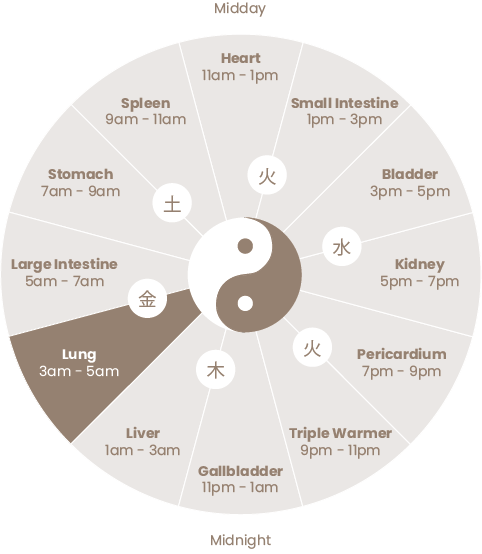
In Five Element Theory of the Chinese Medicine, the lung draws in Qi and kidney grasp the Qi, which is why we work with both the lung and kidney Qi in Qigong. Lung is associated with the Metal element, which is related to the Autumn season. When we nourish the Metal element, we nourish our lungs which helps to nourish us for Autumn to prepare for Winter. Please note that you can also focus on strengthening and tonifying the lung meridian anytime of the year, especially if there is weakness in the lungs or if you experience emotions of grief, sadness or depression.
Lung energy peaks at 3am - 5am, which is when the lung meridian is on duty. This is the time for:
△ deep sleep
△ dreaming
△ detoxification
△ emotional processing
If you regularly wake between 3–5am, it may signal an imbalance in Lung Qi — dryness that leads to cough, Lung deficiency, weakness in breathing or shortness of breath, lowered immunity, or unresolved emotional heaviness such as grief or sadness.
How to nourish your lung Qi: Keep your body warm and drink warm liquids. If you wake between 3–5am, soothe your nervous system with slow breathing — inhale for a count of 5, exhale for a count of 7, focusing on lengthening the exhalation. Before bed, try the Six Healing Sounds (see practice below). This practice is deeply calming for the nervous system and helps clear emotional residue from your day.
The lungs are such vital organs for taking in breath, which is life. This seated Qigong incorporates the breath to help release the ribcage to open up the lungs, including a special lung healing sound to clear emotion/energetic charged in the lungs. A gentle yet powerful practice especially when you don’t have the energy for the day but to charge your lungs to enhance immunity and reduce inflammation.